
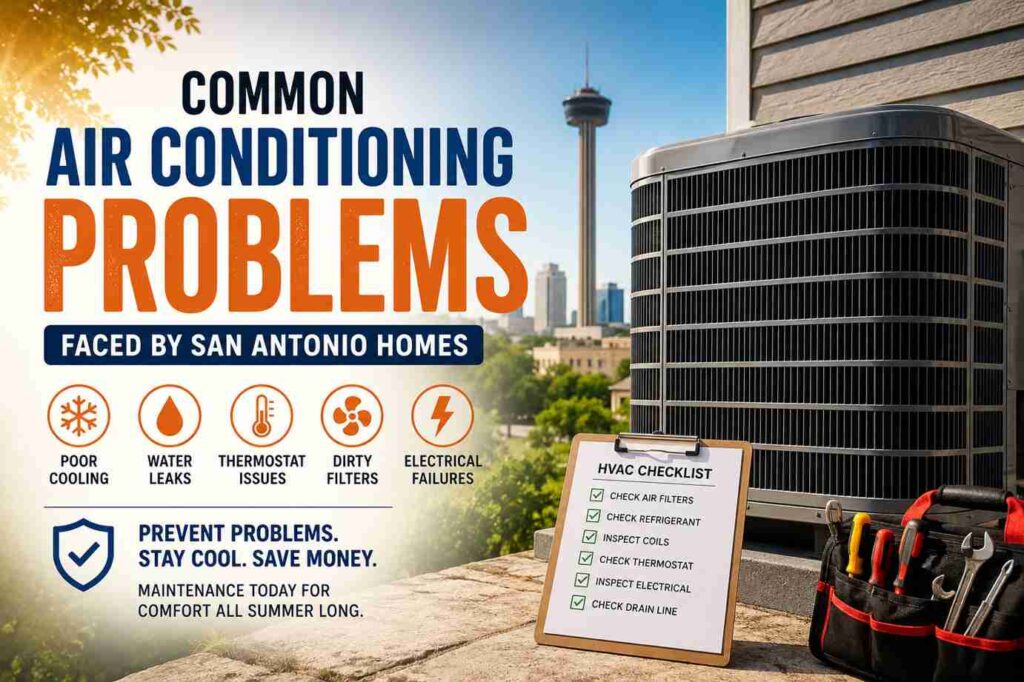
When summer temperatures rise in San Antonio, a reliable air conditioning system becomes more than a luxury—it becomes a necessity. With long periods of intense heat and humidity, homeowners depend heavily on their cooling systems to maintain indoor comfort. Unfortunately, constant use can lead to wear and tear, causing a variety of air conditioning issues that can affect performance, energy efficiency, and comfort.
Understanding the most common air conditioning problems can help homeowners identify issues early and avoid costly repairs. In this guide, we’ll explore the air conditioning challenges frequently faced by San Antonio residents and discuss practical ways to keep HVAC systems running efficiently.
Why Air Conditioners in San Antonio Work Harder
San Antonio’s climate places significant demands on residential cooling systems. During the hottest months, air conditioners may operate for extended periods every day to maintain comfortable indoor temperatures. This increased workload can accelerate component wear and expose underlying maintenance issues.
Factors that contribute to HVAC stress include:
- High outdoor temperatures
- Elevated humidity levels
- Dust and airborne debris
- Aging equipment
- Inadequate maintenance
As a result, homeowners often encounter recurring cooling system problems that require prompt attention.
Poor Cooling Performance
One of the most common complaints among homeowners is that the air conditioner runs continuously but fails to cool the home effectively.
Possible Causes
Several factors can contribute to inadequate cooling:
- Dirty air filters restricting airflow
- Low refrigerant levels
- Blocked condenser coils
- Thermostat malfunctions
- Leaky ductwork
When airflow is restricted or refrigerant levels are insufficient, the system must work harder to achieve the desired temperature. This not only decreases comfort but also increases energy consumption.
Regular inspections and maintenance can help identify these issues before they worsen.
Refrigerant Leaks
Refrigerant plays a critical role in the cooling process. If the refrigerant level drops due to a leak, the system cannot effectively remove heat from indoor air.
Signs of a Refrigerant Leak
Homeowners may notice:
- Warm air coming from vents
- Reduced cooling efficiency
- Ice formation on refrigerant lines
- Higher utility bills
- Hissing sounds near the unit
Ignoring refrigerant leaks can lead to compressor damage, one of the most expensive HVAC repairs. Professional diagnosis and repair are essential whenever a refrigerant issue is suspected.
Frozen Evaporator Coils
Frozen evaporator coils are another frequent problem in San Antonio homes, especially during peak cooling season.
What Causes Coil Freezing?
Common causes include:
- Restricted airflow from dirty filters
- Blocked vents
- Low refrigerant levels
- Faulty blower motors
When airflow is insufficient, moisture on the evaporator coil can freeze, preventing the system from cooling effectively. If homeowners notice ice buildup on indoor components, it’s important to turn off the system and have it inspected.
Dirty or Clogged Air Filters
Air filters are designed to trap dust, pollen, pet dander, and other airborne contaminants. Over time, these particles accumulate and restrict airflow.
Effects of Dirty Filters
Neglecting filter replacement can lead to:
- Reduced cooling performance
- Increased energy usage
- Poor indoor air quality
- Frozen coils
- Premature equipment wear
Many HVAC professionals recommend checking filters monthly and replacing them every one to three months, depending on household conditions.
Thermostat Problems
Sometimes the air conditioner itself isn’t the source of the issue. A malfunctioning thermostat can create the appearance of cooling system failure.
Common Thermostat Issues
These may include:
- Incorrect temperature readings
- Calibration problems
- Dead batteries
- Wiring faults
- Outdated thermostat technology
A thermostat that fails to communicate properly with the HVAC system can cause uneven temperatures, short cycling, or continuous operation.
Upgrading to a programmable or smart thermostat can improve comfort and energy efficiency while reducing system strain.
Electrical Component Failures
Modern air conditioning systems rely on numerous electrical components to function properly. Over time, frequent operation and exposure to heat can cause electrical parts to deteriorate.
Components That Commonly Fail
- Capacitors
- Contactors
- Relays
- Circuit boards
- Wiring connections
Electrical issues may result in systems failing to start, shutting down unexpectedly, or operating intermittently. Because electrical repairs involve safety risks, professional service is usually recommended.
Drainage Problems and Water Leaks
Air conditioners remove humidity from indoor air, creating condensation that must be drained away properly.
Causes of Drainage Issues
Common causes include:
- Clogged condensate drain lines
- Broken condensate pumps
- Improper installation
- Excessive humidity levels
When drainage systems become blocked, water can accumulate around indoor units, potentially causing water damage, mold growth, and indoor air quality concerns.
Routine maintenance often includes cleaning condensate lines to prevent these issues.
Uneven Cooling Throughout the Home
Many San Antonio homeowners experience hot and cold spots in different rooms.
Potential Reasons
Uneven cooling can result from:
- Duct leaks
- Poor insulation
- Inadequate airflow
- Improper system sizing
- Blocked vents
An HVAC system that is too small may struggle to cool the entire home, while an oversized unit may cool too quickly without properly removing humidity.
A professional load calculation can help determine whether the system is appropriately sized for the home’s cooling needs.
Short Cycling
Short cycling occurs when the air conditioner turns on and off frequently without completing a full cooling cycle.
Why Short Cycling Matters
This issue can:
- Increase energy costs
- Accelerate component wear
- Reduce comfort levels
- Shorten equipment lifespan
Potential causes include thermostat issues, refrigerant problems, dirty filters, or oversized equipment. Identifying the root cause early can prevent more serious damage.
Rising Energy Bills
A sudden increase in electricity costs often indicates that the air conditioning system is no longer operating efficiently.
Common Efficiency Killers
- Dirty coils
- Aging equipment
- Air leaks
- Poor insulation
- Lack of maintenance
Even if the system appears to be cooling properly, inefficiencies behind the scenes can significantly increase operating expenses.
Annual tune-ups help ensure all components are functioning at peak efficiency.
Preventive Maintenance Can Save Money
Many of the air conditioning problems discussed above can be prevented through routine maintenance.
Benefits of Regular HVAC Service
Professional maintenance can:
- Improve energy efficiency
- Extend equipment lifespan
- Reduce repair costs
- Enhance indoor comfort
- Improve air quality
Routine inspections allow technicians to identify worn components, clean critical parts, and address minor issues before they become major repairs.
Conclusion
San Antonio’s demanding climate places considerable stress on residential air conditioning systems. From refrigerant leaks and frozen coils to thermostat malfunctions and drainage issues, homeowners can encounter a variety of cooling problems throughout the year. Understanding these common issues allows homeowners to recognize warning signs early and take action before small concerns turn into expensive repairs.
Regular maintenance, timely repairs, and professional inspections remain the best strategies for ensuring reliable cooling performance during San Antonio’s hottest months. By staying proactive, homeowners can improve comfort, lower energy costs, and extend the life of their HVAC systems.
If you’re experiencing ongoing air conditioning issues or simply want to keep your system operating efficiently, it may be worth consulting a local HVAC professional. Many homeowners in the area turn to ASC Heating & Air for inspections, maintenance, and repair services. To explore their services and get additional information, visit Know More.